Vocabulary سطح C1 انگلیسی
سطح C1 در زبان انگلیسی یکی از مراحل پیشرفته یادگیری است که زبانآموزان را قادر میسازد بهطور روان، دقیق و طبیعی در محیطهای علمی، حرفهای و اجتماعی ارتباط برقرار کنند. در این سطح، دایره واژگان بسیار گستردهتر و متنوعتر میشود و شامل اصطلاحات تخصصی، واژگان آکادمیک و ترکیبات پیشرفته میگردد. هدف اصلی در این مرحله، توانایی بیان ایدههای پیچیده، دفاع از دیدگاهها، نوشتن متون تحلیلی و درک متون تخصصی طولانی است.
اهمیت یادگیری واژگان در سطح C1
واژگان سطح C1 به زبانآموزان کمک میکند:
-
متون علمی و دانشگاهی را بهطور کامل درک کنند.
-
در محیطهای حرفهای مانند جلسات کاری، کنفرانسها و ارائهها به شکلی قوی ظاهر شوند.
-
در بحثهای انتقادی و تحلیلی شرکت کنند و ایدههای پیچیده را بیان نمایند.
-
مهارت نوشتن مقالات، گزارشها و متون رسمی را تقویت کنند.
چالشهای یادگیری واژگان سطح C1
در این سطح، چالش اصلی فقط حفظ کردن کلمات نیست؛ بلکه یادگیری کاربرد دقیق واژگان در موقعیتهای مختلف است. بسیاری از واژگان دارای معانی چندگانه یا کاربردهای خاص در متون آکادمیک و تخصصی هستند. بنابراین، تمرکز باید بر روی یادگیری عمیق، مثالهای کاربردی و تمرین در زمینههای واقعی باشد.
استراتژیهای مؤثر برای یادگیری
-
خواندن متون تخصصی (روزنامههای معتبر، مقالات علمی، کتابهای دانشگاهی).
-
نوشتن متون تحلیلی برای تمرین استفاده از واژگان در بافتهای مختلف.
-
شرکت در بحثهای پیشرفته برای تقویت دایره لغات و کاربرد آنها در مکالمه.
-
یادگیری ریشهها و پسوندها که به درک بهتر واژگان کمک میکند.
-
مرور منظم با فلشکارت یا اپلیکیشنها برای تثبیت در حافظه بلندمدت.
C1 Vocabulary List (100 Words)
| Word | Meaning | Example |
|---|---|---|
| Aberration | Something unusual or unexpected | His angry outburst was an aberration. |
| Acumen | Keen insight or sharpness | Her business acumen helped the company grow. |
| Adulation | Excessive praise or admiration | The actor enjoyed the adulation of fans. |
| Alleviate | To make something less severe | Medicine can alleviate the pain. |
| Auspicious | Promising success or favorable | It was an auspicious beginning. |
| Belligerent | Hostile and aggressive | He became belligerent after drinking. |
| Benign | Kind, harmless | The tumor turned out to be benign. |
| Cajole | To persuade with flattery | She cajoled him into signing the paper. |
| Candor | Honesty, openness | I appreciate your candor in this matter. |
| Circumvent | Find a way around | They tried to circumvent the rules. |
| Clandestine | Secret, hidden | The agents held a clandestine meeting. |
| Cogent | Clear, logical, convincing | Her argument was both cogent and persuasive. |
| Complacent | Self-satisfied, unconcerned | He grew complacent after success. |
| Conducive | Helpful, making a situation possible | A quiet room is conducive to study. |
| Conundrum | A difficult problem | He faced a moral conundrum. |
| Copious | Abundant, plentiful | She took copious notes in class. |
| Cursory | Quick, without attention to detail | He gave a cursory glance at the file. |
| Debilitate | To weaken | The disease will debilitate the patient. |
| Deference | Respect, submission | He spoke with deference to his teacher. |
| Demure | Shy, modest | She gave him a demure smile. |
| Denounce | To criticize publicly | The politician denounced corruption. |
| Didactic | Intended to teach | The novel was more didactic than entertaining. |
| Disparate | Essentially different | The two cultures were disparate. |
| Disseminate | To spread widely | They disseminated the information quickly. |
| Eclectic | Choosing from various sources | She has an eclectic taste in music. |
| Egregious | Outstandingly bad | It was an egregious mistake. |
| Elucidate | To explain clearly | The teacher elucidated the concept. |
| Emulate | To imitate with respect | She tried to emulate her mentor’s success. |
| Enigma | Mystery, puzzle | His disappearance remains an enigma. |
| Esoteric | Intended for a small group | The professor’s lecture was too esoteric. |
| Exacerbate | To make worse | His actions only exacerbated the problem. |
| Exonerate | To free from blame | The evidence exonerated him. |
| Fastidious | Very attentive to detail | He is fastidious about cleanliness. |
| Furtive | Secretive, sly | She cast a furtive glance at him. |
| Garrulous | Excessively talkative | The garrulous man told endless stories. |
| Hackneyed | Overused, unoriginal | The phrase is hackneyed and boring. |
| Harbinger | Sign of something to come | Dark clouds are a harbinger of rain. |
| Impetuous | Acting quickly without thought | He made an impetuous decision. |
| Incessant | Never stopping | The incessant noise annoyed us. |
| Incisive | Sharp, clear-thinking | Her incisive remarks impressed everyone. |
| Indolent | Lazy, avoiding activity | The indolent student never studied. |
| Ineffable | Too great to describe | The beauty was ineffable. |
| Innate | Inborn, natural | She has an innate talent for music. |
| Insidious | Harmful but subtle | The disease is insidious in its spread. |
| Intrepid | Fearless, adventurous | The intrepid explorer climbed the mountain. |
| Juxtapose | Place side by side | The artist juxtaposed light and dark. |
| Lament | To express sorrow | She lamented the loss of her friend. |
| Latent | Hidden, not visible | He has latent abilities in math. |
| Laud | To praise highly | They lauded her achievements. |
| Lethargic | Lacking energy | He felt lethargic after lunch. |
| Lucid | Clear, easy to understand | Her explanation was lucid and simple. |
| Magnanimous | Generous, forgiving | He was magnanimous in victory. |
| Malevolent | Evil-minded | The malevolent witch cursed the village. |
| Mellifluous | Pleasant sounding | Her mellifluous voice charmed the audience. |
| Meticulous | Very careful | She was meticulous in her research. |
| Mundane | Ordinary, dull | He was tired of mundane tasks. |
| Nefarious | Wicked, criminal | The villain’s plan was nefarious. |
| Nonchalant | Calm, relaxed | He answered in a nonchalant tone. |
| Oblivious | Unaware | She was oblivious to the danger. |
| Obsolete | No longer useful | Typewriters are now obsolete. |
| Omnipotent | All-powerful | In myths, gods are omnipotent. |
| Opulent | Rich, luxurious | The opulent palace amazed visitors. |
| Ostentatious | Showy, pretentious | He wore an ostentatious gold watch. |
| Panacea | Remedy for all problems | There is no panacea for poverty. |
| Paragon | Perfect example | She is a paragon of kindness. |
| Paucity | Scarcity, lack | There was a paucity of resources. |
| Pecuniary | Relating to money | He suffered pecuniary losses. |
| Pensive | Deep in thought | She looked pensive at the window. |
| Perfunctory | Done without effort | His apology was perfunctory. |
| Pernicious | Harmful effect | Pernicious weeds spread quickly. |
| Perspicacious | Having keen insight | The perspicacious leader made wise decisions. |
| Placid | Calm, peaceful | The lake was placid at dawn. |
| Platitude | Overused remark | His speech was full of platitudes. |
| Plausible | Seemingly reasonable | Her excuse sounded plausible. |
| Precarious | Unstable, risky | They lived in precarious conditions. |
| Precocious | Advanced for age | The precocious child could read at four. |
| Proclivity | Natural tendency | He has a proclivity for art. |
| Prosaic | Dull, unimaginative | Her writing style was prosaic. |
| Quintessential | Perfect example | He is the quintessential gentleman. |
| Rancor | Bitter resentment | She spoke without rancor. |
| Rapport | Friendly relationship | The teacher built rapport with students. |
| Recalcitrant | Stubbornly disobedient | The recalcitrant student refused to obey. |
| Redundant | Unnecessary repetition | His speech was full of redundant words. |
| Relegate | To assign to a lower position | He was relegated to a minor role. |
| Salient | Most important | She pointed out the salient features. |
| Sanguine | Optimistic, hopeful | He remained sanguine about the future. |
| Sporadic | Occasional, irregular | Sporadic rain showers occurred. |
| Superfluous | Unnecessary | The report contained superfluous details. |
| Surreptitious | Secret, stealthy | They had a surreptitious meeting. |
| Taciturn | Silent, reserved | The taciturn man rarely spoke. |
| Tenable | Defensible, reasonable | Her theory is no longer tenable. |
| Trepidation | Fear, anxiety | He entered the room with trepidation. |
| Ubiquitous | Found everywhere | Smartphones are ubiquitous today. |
| Umbrage | Offense, resentment | He took umbrage at her remark. |
| Vacillate | To waver, be indecisive | She vacillated between choices. |
| Vehement | Strong feeling, passionate | He gave a vehement speech. |
| Verbose | Using too many words | The essay was verbose and unclear. |
| Vociferous | Loud, forceful | The crowd was vociferous in protest. |
| Wary | Cautious, careful | Be wary of strangers. |
| Zealous | Passionate, enthusiastic | He is zealous in his work. |
رسیدن به سطح C1 واژگان انگلیسی، زبانآموز را به مرحلهای میرساند که میتواند بهراحتی در محیطهای دانشگاهی، حرفهای و اجتماعی فعالیت کند. یادگیری این کلمات نه تنها مهارت مکالمه و نوشتار را تقویت میکند، بلکه درک عمیقتری از متون تخصصی و فرهنگی ایجاد خواهد کرد.
مشاهده دوره های آموزش زبان انگلیسی C1
برای ثبت نظر و دیدگاه خود لطفا با تشکیل حساب کاربری، عضو وب سایت شوید.
آخرین اخبار
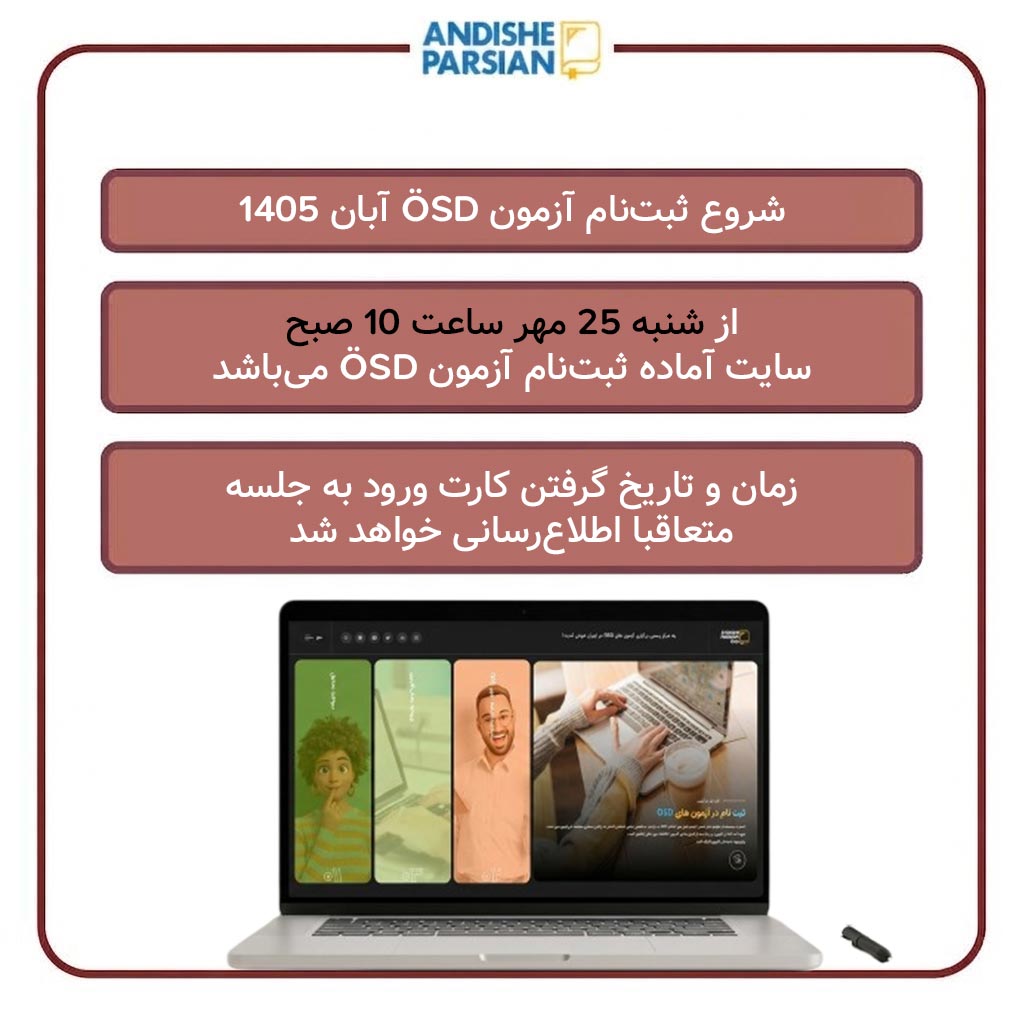
ثبت نام آزمون ÖSD آبان 1405
متقاضیان محترم آزمون بینالمللی ÖSD ، میتوانند برای شرکت در آزمون آبان ۱۴۰۵ در سطوح A1,A2,B1,B2,C1,C2 در زمان اعلامشده نسبت به ثبتنام اولیه اقدام نمایند.
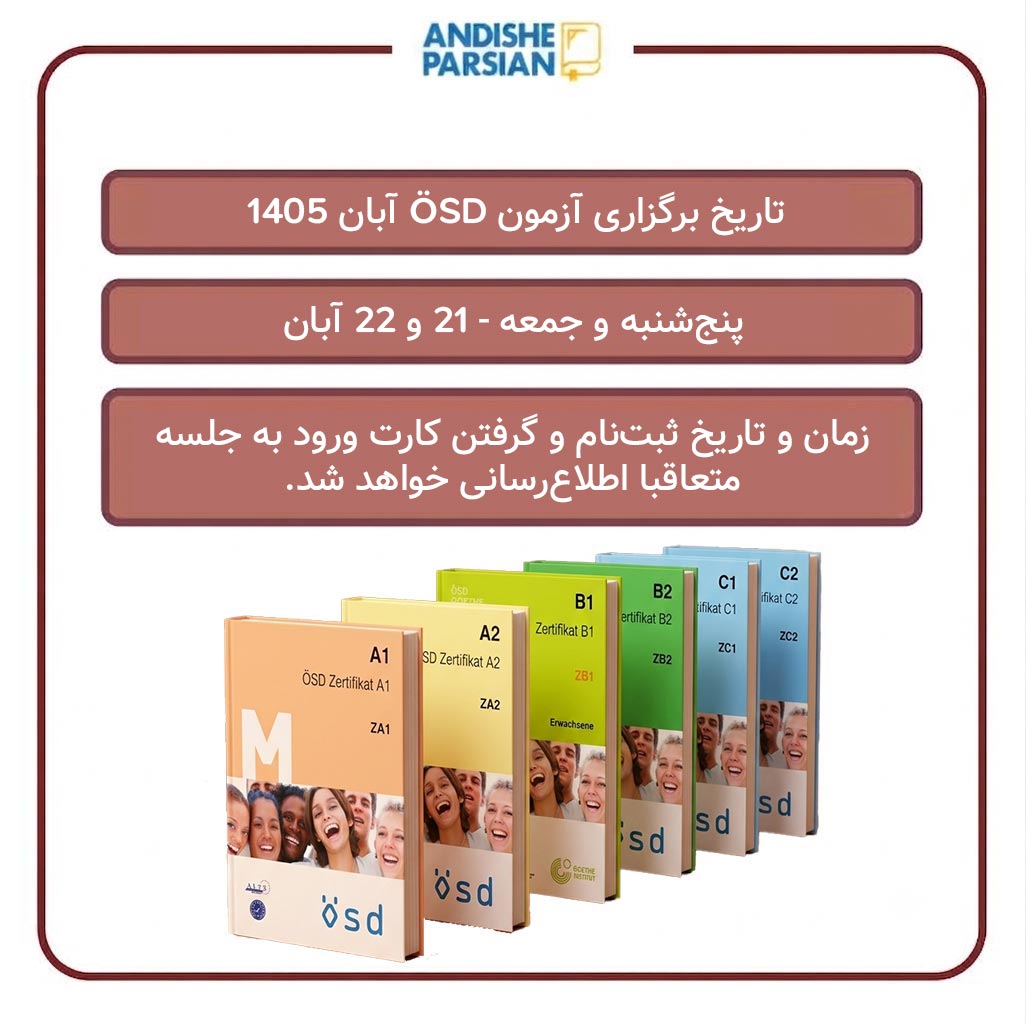
تاریخ برگزاری آزمون ÖSD آبان ۱۴۰۵
آموزشگاه زبان اندیشه پارسیان، سنتر برگزارکننده رسمی آزمون بینالمللی ÖSD، با افتخار اعلام میکند که در آبان سال 1405 این آزمون را برگزار خواهد کرد.
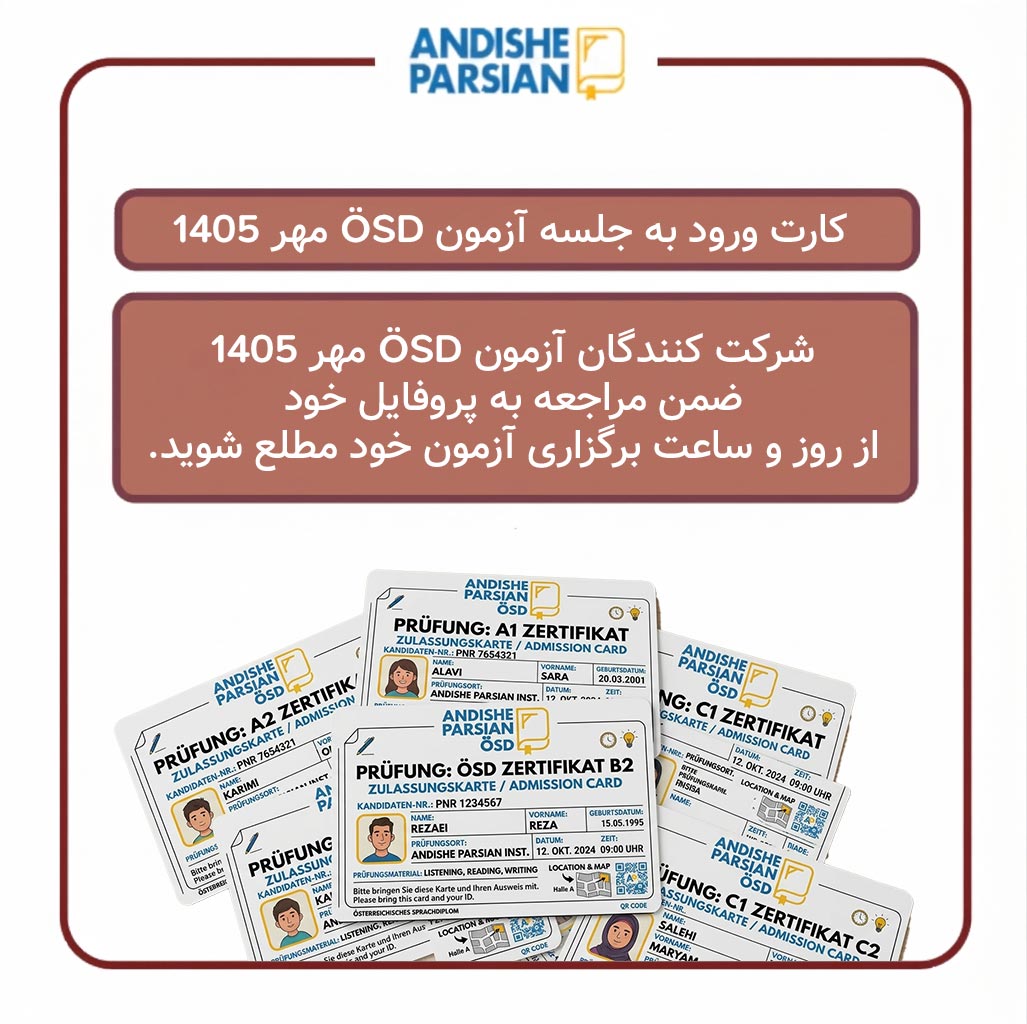
دریافت کارت ورود به جلسه آزمون ÖSD مهر 1405
شرکتکنندگان گرامی آزمون ÖSD مهرماه ۱۴۰۵کارت ورود به جلسه آزمون از طریق پروفایل کاربری شما در دسترس خواهد بود
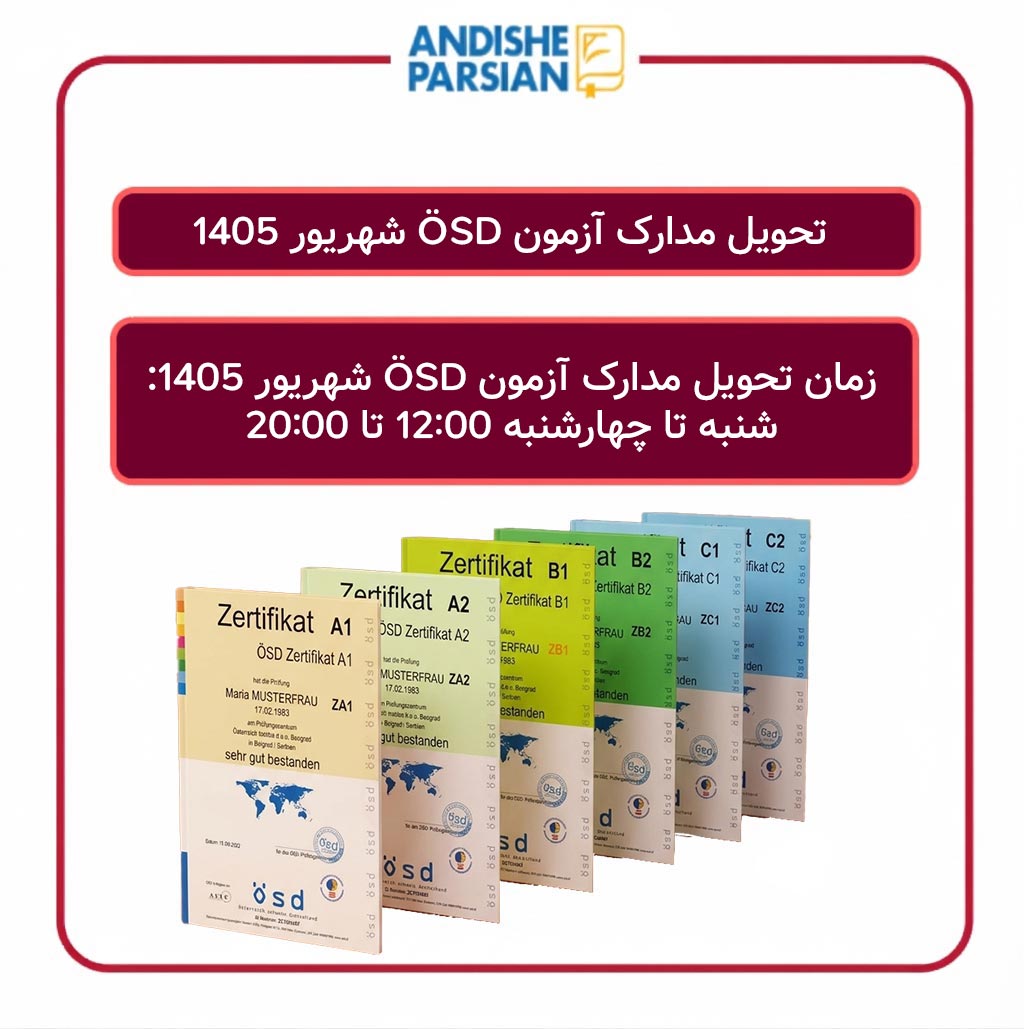
تحویل مدارک آزمون ÖSD شهریور ۱۴۰۵
شرکتکنندگان محترم آزمون ÖSD شهریورماه ۱۴۰۵،مدارک مربوط به این آزمون آماده تحویل است. برای اطلاع از زمان، محل و شرایط دریافت مدارک، این اطلاعیه را مطالعه فرمایید.
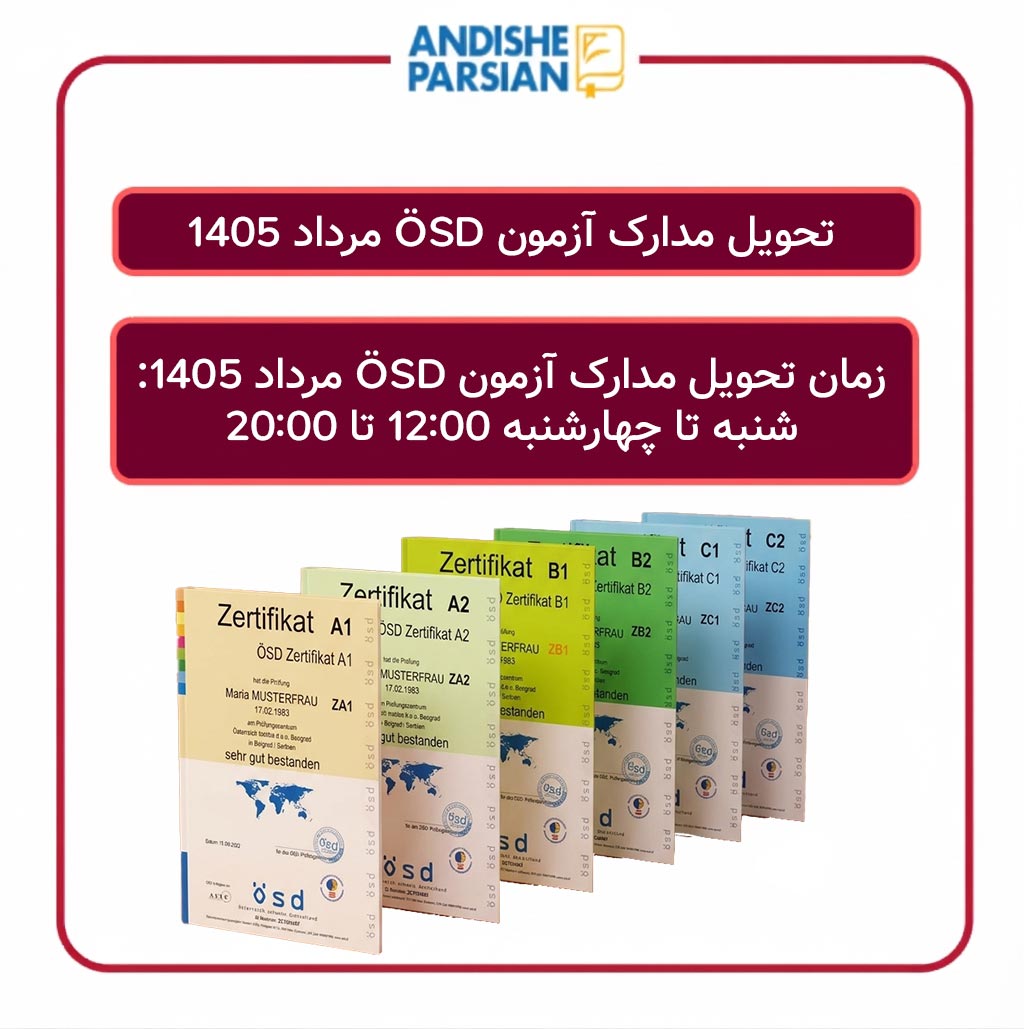
تحویل مدارک آزمون ÖSD مرداد ۱۴۰۵
شرکتکنندگان محترم آزمون ÖSD مردادماه ۱۴۰۵،مدارک مربوط به این آزمون آماده تحویل است. برای اطلاع از زمان، محل و شرایط دریافت مدارک، این اطلاعیه را مطالعه فرمایید.
برچسب ها
- Vocabulary سطح C1 انگلیسی
- سطح C1 انگلیسی
- Vocabulary سطح C1
- Vocabulary C1 انگلیسی
- Vocabulary انگلیسی
- Vocabulary C1
- C1 انگلیسی
- Vocabulary
- انگلیسی
- سطح C1
- C1
- آموزش زبان انگلیسی
- آموزش زبان
- زبان انگلیسی
- آموزش
- زبان
- آموزش انگلیسی
- اندیشه پارسیان
- مقاله
- واژگان سطح C1 انگلیسی
- لغات پیشرفته
- یادگیری واژگان
- مثال کاربردی
- لغات آکادمیک
آخرین مقالات

لیست کامل گرامر زبان آلمانی سطح A2
راهنمای جامع گرامر زبان آلمانی سطح A2، شامل زمانهای فعل، افعال مُدال و انعکاسی، حالتهای دستوری، حروف اضافه، ترتیب کلمات، جملههای وابسته، صرف و مقایسه صفات، قواعد نفی و مهمترین مباحث گرامری برای آمادگی ورود به سطح B1.

لیست کامل گرامر زبان انگلیسی سطح A1
یادگیری گرامر انگلیسی در سطح A1، اولین قدم برای ساختن پایهای قدرتمند و ورود به دنیای ارتباطات جهانی است. با یادگیری اصولی، تمرین مستمر و قدمهای کوچک، امروز شروع کن تا فردا با اعتمادبهنفس بیشتر صحبت کنی و فرصتهای تازهای بسازی.

لیست کامل گرامر زبان آلمانی سطح A1
با آموزش گرامر زبان آلمانی A1، اولین قدم را برای یادگیری اصولی Deutsch بردارید!از ضمایر و فعلها تا ساختار جمله و حروف اضافه، مهمترین مباحث پایه را ساده و روان یاد بگیرید.
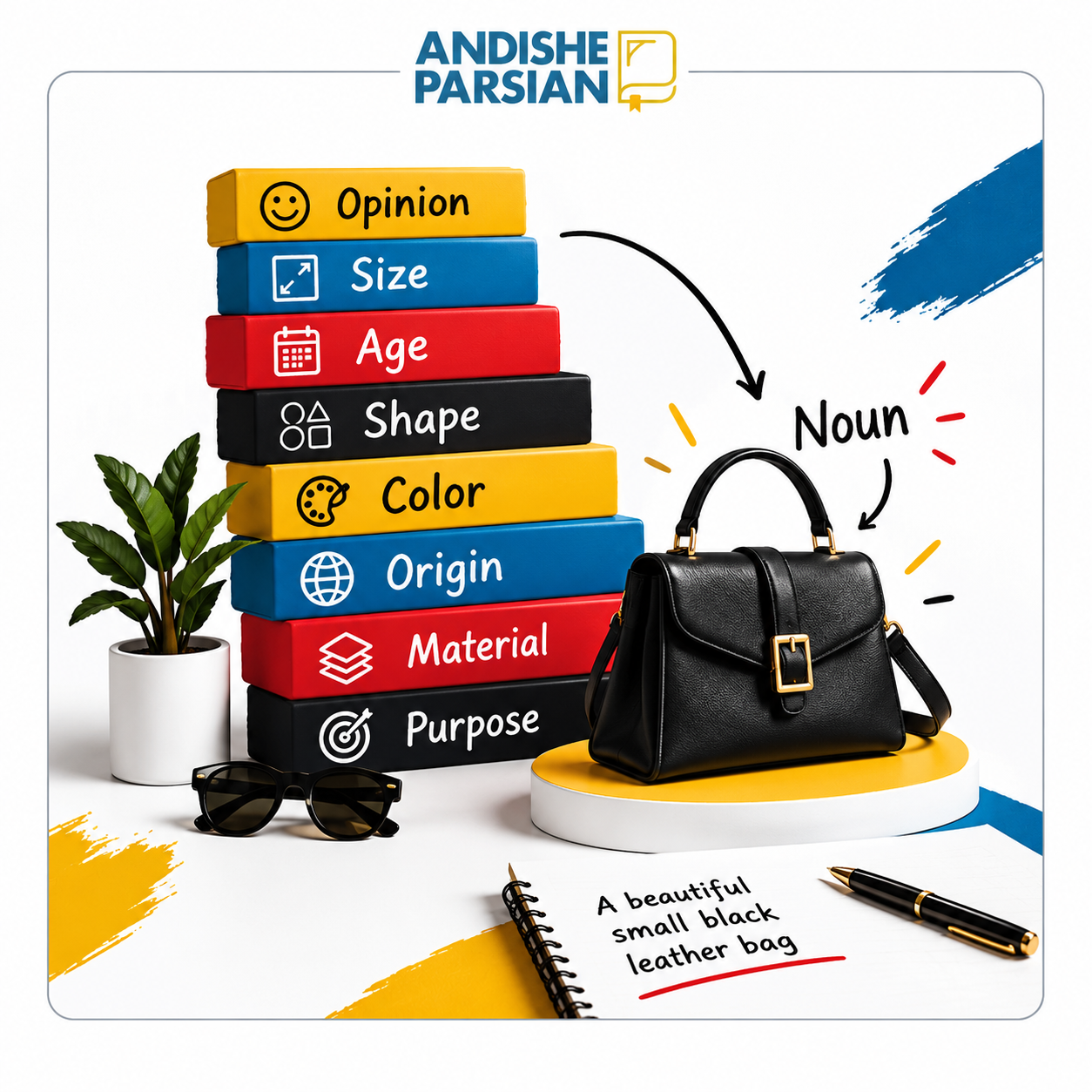
آموزش ترتیب صفتها در زبان انگلیسی
با یادگیری ترتیب صفتها در زبان انگلیسی، جملههایی طبیعیتر، دقیقتر و زیباتر بسازید! در این آموزش جذاب، با ترتیب صحیح صفتها، مثالهای کاربردی و نکات مهم گرامری آشنا میشوید تا بتوانید ویژگیهای افراد، اشیا و مکانها را توصیف کنید.
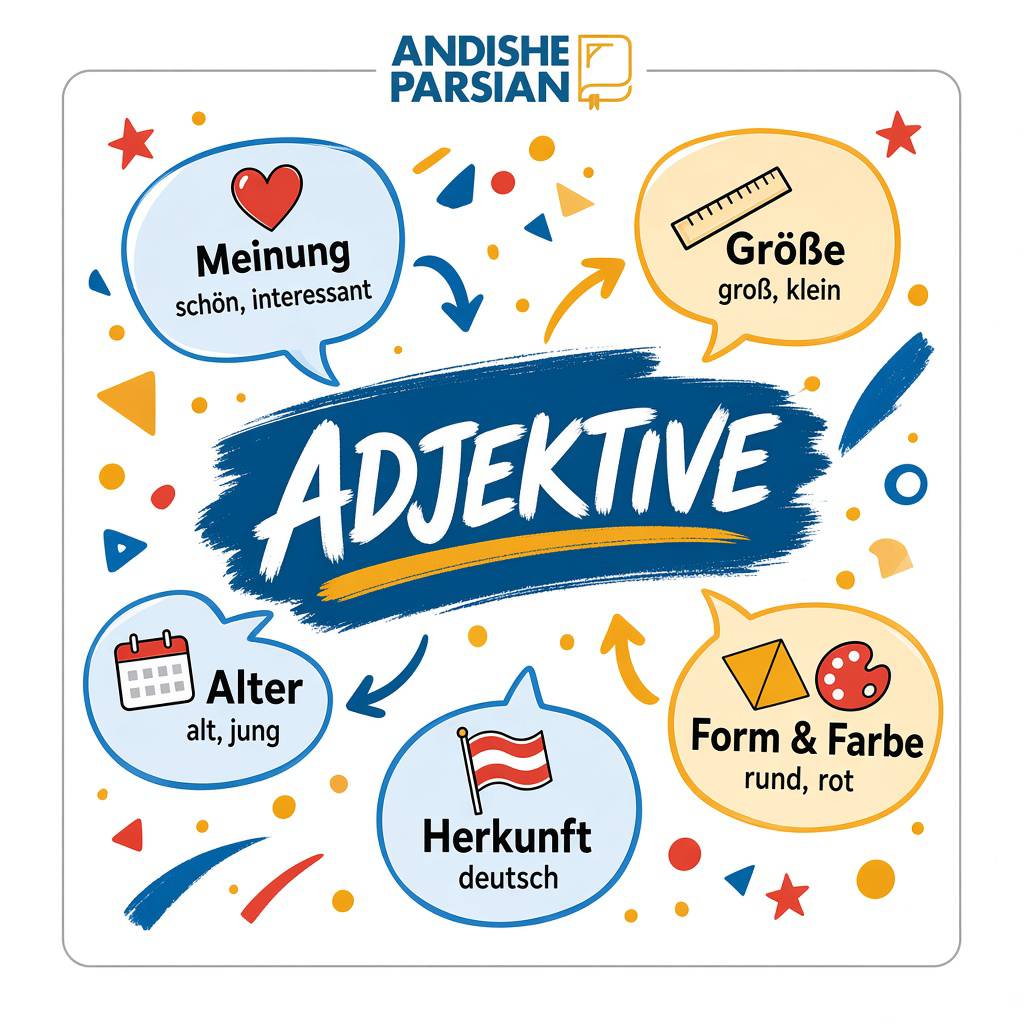
آموزش ترتیب صفتها در زبان آلمانی
در این مقاله با ترتیب صفتها در زبان آلمانی، قواعد قرارگیری چند صفت کنار اسم، صرف صفتها و مثالهای کاربردی همراه با ترجمه فارسی آشنا شوید.
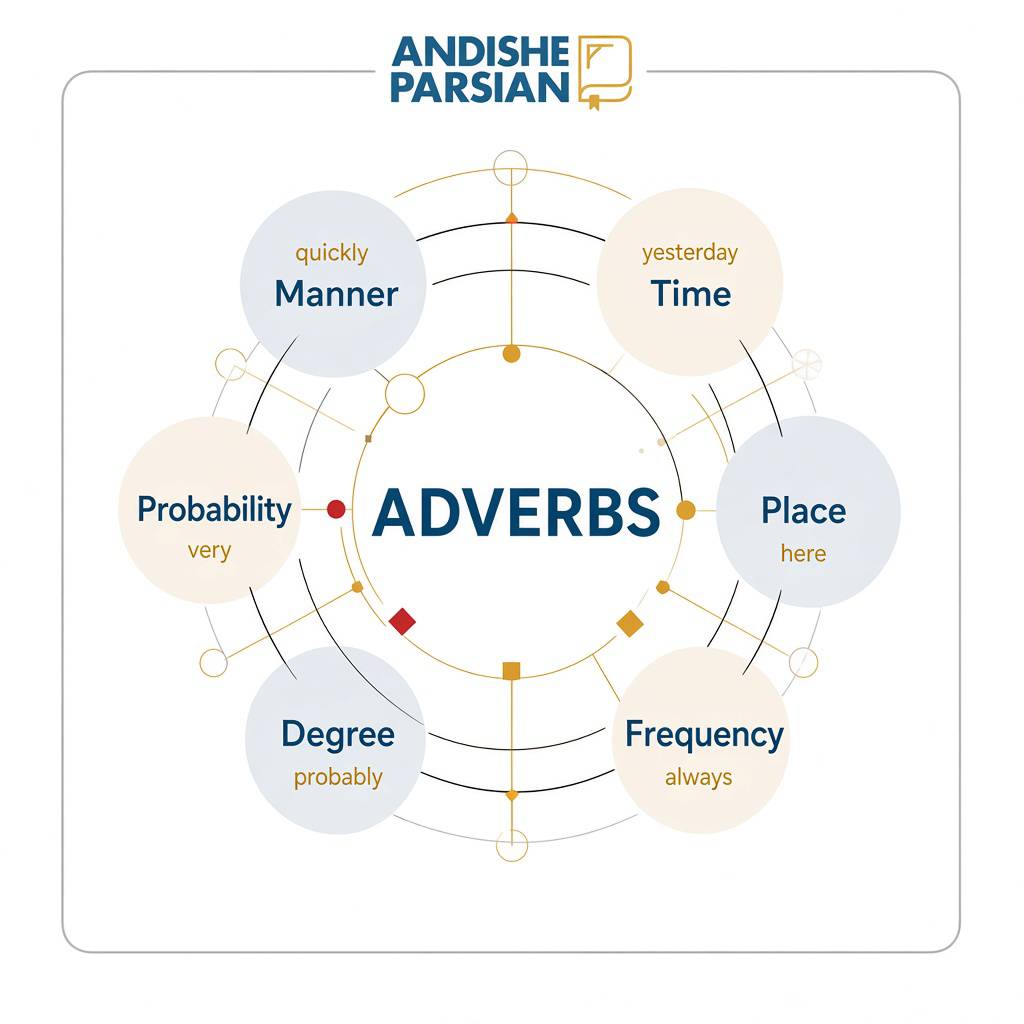
آموزش انواع قید در زبان انگلیسی
با آموزش انواع قید در زبان انگلیسی، جملههایی دقیقتر، جذابتر و طبیعیتر بسازید! در این مقاله با کاربرد قیدها، انواع آنها و مثالهای کاربردی آشنا شوید و مهارت زبان انگلیسی خود را یک قدم ارتقا دهید.
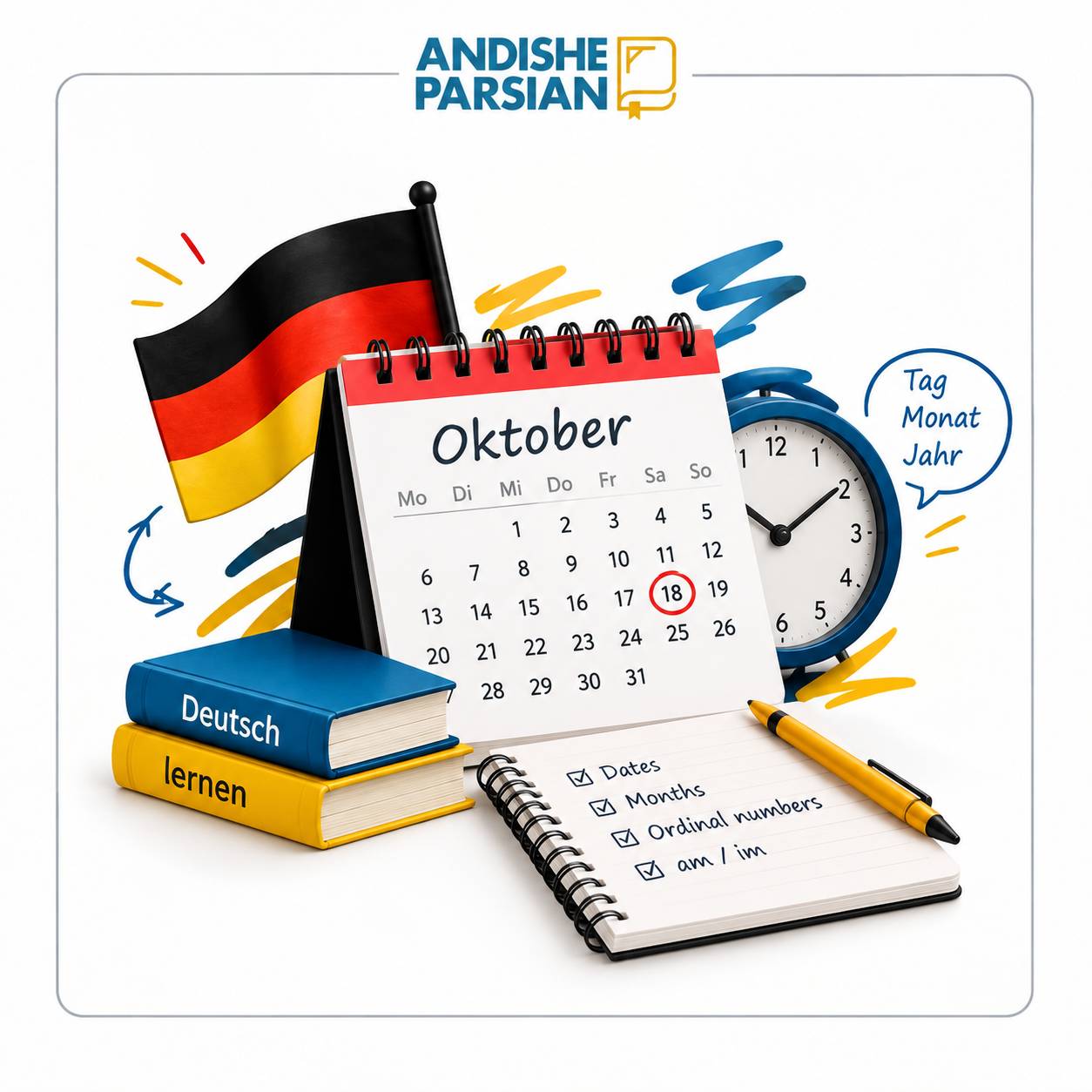
آموزش نوشتن تاریخ در زبان آلمانی
در این مقاله، آموزش نوشتن تاریخ در زبان آلمانی را از پایه یاد میگیرید. با نام ماهها، اعداد ترتیبی، ترتیب صحیح روز و ماه و کاربرد حروف اضافه am و im آشنا میشوید و با مثالهای کاربردی، مهارت خود را تقویت میکنید.
.png "آموزش نوشتن تاریخ به زبان انگلیسی")
آموزش نوشتن تاریخ به زبان انگلیسی
نحوه نوشتن و خواندن تاریخ به زبان انگلیسی را بهصورت کامل و کاربردی یاد میگیرید. با تفاوت تاریخنویسی در انگلیسی بریتانیایی و آمریکایی، نام ماهها، اعداد ترتیبی و حروف اضافه پرکاربرد آشنا میشوید تا بتوانید تاریخها را در مکالمات روزمره، ایمیلها و متون رسمی بهدرستی بنویسید.
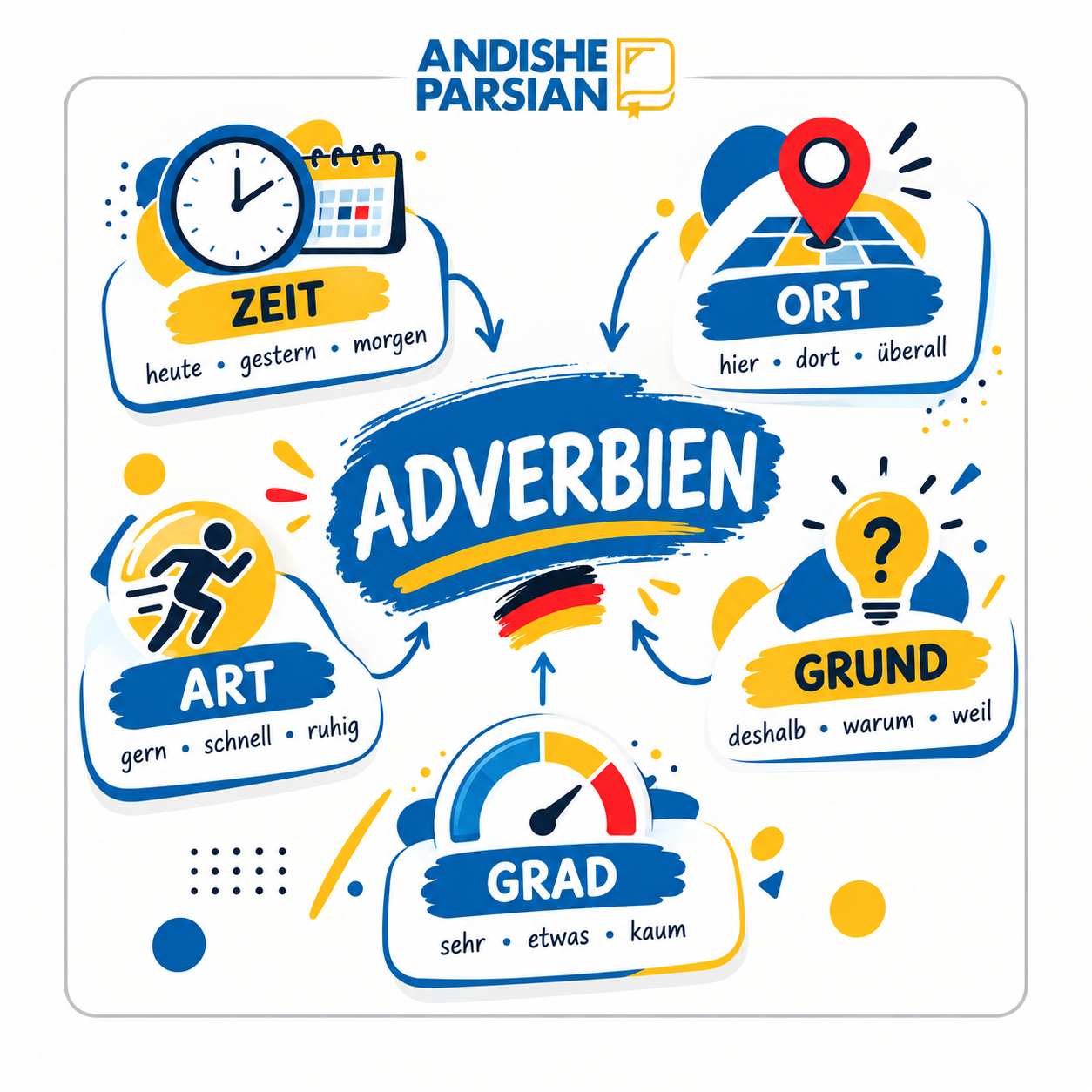
آموزش انواع قید در زبان آلمانی
میخواهید آلمانی را روانتر صحبت کنید و جملههایی طبیعیتر بسازید؟ در این مقاله، انواع قید در زبان آلمانی را با مثالهای کاربردی و ترجمه فارسی یاد بگیرید و یک قدم به تسلط بیشتر بر این زبان نزدیکتر شوید!

تفاوت Say، Tell، Speak و Talk در زبان انگلیسی
در این مقاله با تفاوت چهار فعل پرکاربرد انگلیسی، Say، Tell، Speak و Talk آشنا میشوید و یاد میگیرید هرکدام را در موقعیت مناسب به کار ببرید. با بررسی کاربردها و مثالهای ساده، میتوانید طبیعیتر صحبت کنید و از اشتباهات رایج در مکالمه انگلیسی جلوگیری کنید.